Currently, we are not accepting Medicaid, HMO or State Insurances


From Film To Pixels: How Digital X-Rays Are Transforming Dentistry
November 18, 2024
Dental X-Rays
In a world of modern dentistry, technological advancements are reshaping how oral health is diagnosed, treated, and maintained. One game-changing innovation is the shift from traditional film-based X-rays to digital X-ray technology. This evolution not only enhances patient care but also revolutionizes the entire dental experience. Let’s dive into how digital X-rays are redefining dentistry.
A Quick Look Back: The Era of Film-Based X-Rays
Before the digital revolution, film-based X-rays dominated dental diagnostics. While effective for their time, they came with significant drawbacks:
- Long processing times: Dentists had to wait for films to develop before viewing results.
- Higher radiation exposure: Traditional X-rays often use more radiation.
- Limited accuracy: Film images were prone to errors in clarity and detail.
- Environmental concerns: Chemicals used in processing pose risks to the environment.
The move to digital X-rays solved many of these issues while introducing new benefits.
How Digital X-Rays Work: The Science Behind the Pixels
Digital X-rays use electronic sensors instead of photographic film to capture images. The process includes:
- Capture: A sensor placed in the mouth records the X-ray image.
- Transfer: The image is instantly transmitted to a computer.
- Processing: Advanced software enhances the image for detailed analysis.
This seamless process allows dentists to diagnose and treat patients faster than ever before.
Benefits of Digital X-Rays: Why Dentists Prefer Pixels Over Film
Digital X-rays bring a multitude of benefits to both dentists and patients:
1. Upgraded Image Quality
- Higher resolution for better diagnostic accuracy.
- Zoom and contrast tools allow dentists to spot even the tiniest abnormalities.
2. Less Radiation Exposure
- Up to 90% less radiation compared to traditional X-rays.
- Safer for patients, especially children and pregnant individuals.
3. Instant Results
- No waiting for films to develop.
- Dentists can diagnose issues during the same appointment.
4. Environmentally Friendly
- Eliminates the need for chemicals used in film processing.
- Reduces dental offices’ carbon footprint.
5. Cost-Effectiveness
- Though initial setup costs are higher, digital X-rays save money in the long run by reducing waste and processing costs.
Applications of Digital X-Rays In Modern Dentistry
Digital X-rays are not just about convenience—they play a critical role in various dental treatments:
1. Early Cavity Detection
- High-resolution images reveal cavities long before they’re visible to the naked eye.
- Enables preventive care to stop decay in its tracks.
2. Precision in Root Canal Therapy
- Helps locate infected or damaged pulp with pinpoint accuracy.
- Ensures more successful and efficient treatment.
3. Monitoring Orthodontic Progress
- Tracks tooth movement in braces or aligners.
- Provides detailed visuals for orthodontic planning.
4. Implant Planning
- 3D imaging capabilities aid in precise implant placement.
- Reduces complications during surgery.
5. Screening for Oral Diseases
- Detects early signs of conditions like oral cancer or gum disease.
- Improves outcomes through timely intervention.
Addressing Patient Concerns: Are Digital X-Rays Safe?
Patients often worry about radiation exposure during dental X-rays. With digital X-rays, the concerns are minimal:
- The radiation levels are significantly lower than traditional X-rays.
- Safety measures, such as lead aprons, are still used for added protection.
Fun Fact: The radiation from a digital X-ray is comparable to the amount you receive during a short walk outside on a sunny day!
How They Improve The Patient Experience?
The advantages of digital X-rays go beyond diagnostics; they enhance the overall patient journey:
- Faster Appointments: Less time waiting for results.
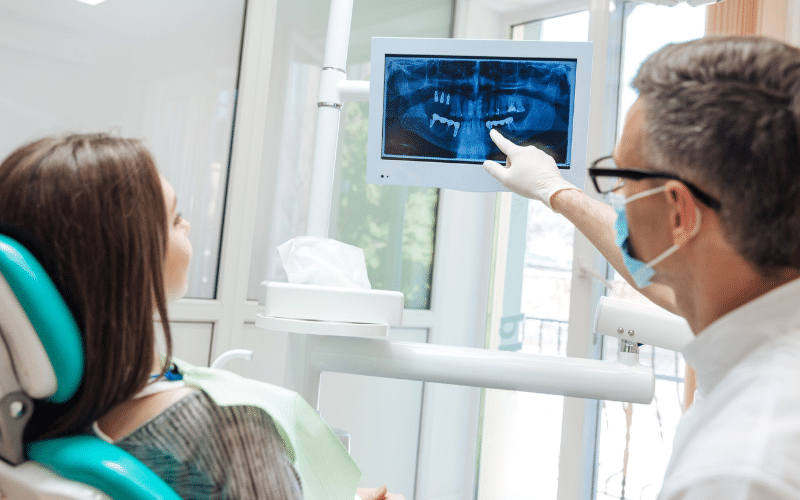
- Improved Communication: Dentists can show patients real-time images to explain issues.
- Custom Treatment Plans: Clear visuals help dentists tailor treatments to individual needs.
Looking Ahead: The Future of Digital X-Rays In Dental World
As technology advances, the potential for digital X-rays continues to grow:
- AI Integration: Artificial intelligence can assist in analyzing images for faster and more accurate diagnoses.
- 3D Imaging: Expanding on current capabilities for more comprehensive views of oral structures.
- Mobile Access: Patients may soon be able to view their X-rays directly from their phones.
The future promises even more patient-centric innovations.
Quick Takeaways: Why Are They a Game-Changer?
Here’s a snapshot of what makes digital X-rays revolutionary:
- Better diagnosis: High-resolution images for accurate treatment.
- Safer: Reduced radiation exposure.
- Faster: Instant results streamline dental visits.
- Eco-friendly: No chemicals or physical film waste.
- Future-ready: Aligns with emerging tech trends in dentistry.
Pixels for a Better Smile!
The transition from film to digital X-rays marks a pivotal moment in dental care. This technology not only improves diagnostic accuracy and patient safety but also streamlines the entire dental experience. Whether it’s detecting cavities early or planning complex procedures, digital X-rays ensure that dentistry remains at the forefront of innovation.
As the field continues to evolve, digital X-rays stand as a testament to how cutting-edge technology can transform patient care, one pixel at a time. So, the next time our dentist uses a digital X-ray, remember—it’s not just an image; it’s a step towards a long-lasting smile.
Recent Post

September 14, 2026
Is That Tooth Pain Actually a Dangerous Abscess?

September 7, 2026
Why Your Coffee Stains Won’t Whiten (And What Actually Works)

August 24, 2026
Your Smile Makeover From Start to Finish: What Happens at Each Appointment

August 17, 2026
Your 2 AM Toothache Doesn’t Have to Ruin Your Weekend

August 10, 2026
Dental Pain at 2 AM: Your Real Options Beyond the ER
Categories
Dental X-Rays (3)